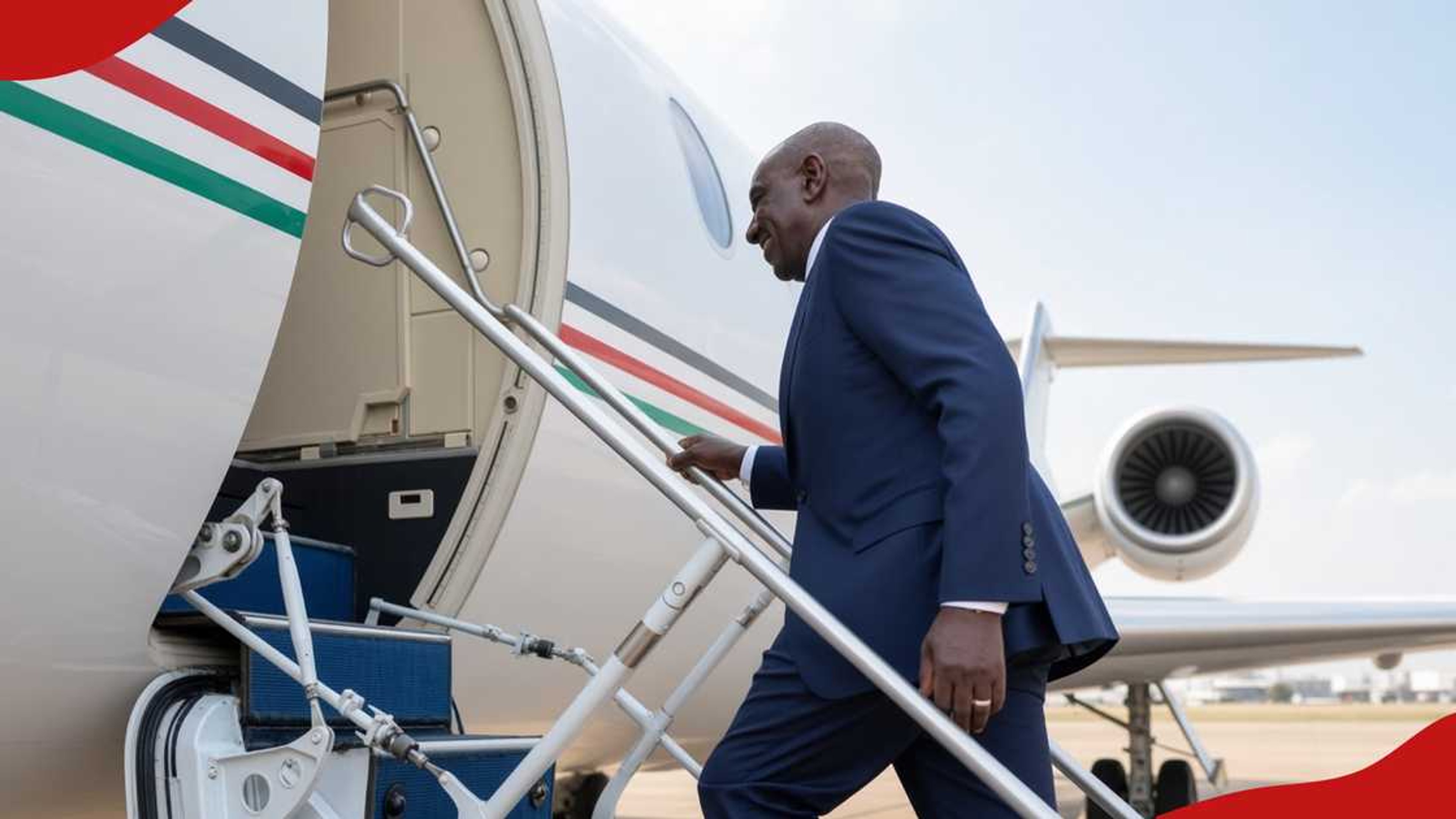
Kenya’s presidential aircraft, the Kenya Air Force Fokker 70 KAF308 — better known as Harambee One — is back in the country after a year-long overhaul in the Netherlands that has given the ageing jet a new lease of life, even as it leaves unresolved the bigger question of what replaces it.
The aircraft was taken to the Netherlands in August 2025 for a major overhaul conducted by Fokker Services Group, with work going well beyond routine servicing to include deep maintenance, interior refurbishment and upgrades to onboard systems.
Fokker Services Group confirmed on Thursday, August 20, 2026, that it had completed an extensive hangar visit for the aircraft at its Woensdrecht facility.
What changed: Fokker Services Group said the deep maintenance was intended to make Harambee One fit for carrying the president again, following long-standing concerns about the aircraft’s age and safety.
The headline upgrade is communications: the installation of the Gogo Galileo FDX satellite communications system, supplied by GoGo Business Aviation.
That system runs on Eutelsat OneWeb’s low-Earth-orbit satellite network, giving the aircraft modern, secure inflight connectivity.
Fokker Services Group praised the Kenya Air Force for maintaining the aircraft over more than three decades, calling KAF308 a strong airframe and one of the last Fokker 70s built and delivered.The plane, acquired in 1995, has now served four Kenyan presidents.
Why it went in for repairs
The overhaul followed a troubled 2025. In February that year, the aircraft suffered a technical failure during a summit in Dar es Salaam, stranding President Ruto and forcing the use of a backup Dash 8-100 to fly him home — an incident that sharpened safety concerns and highlighted the difficulty of sourcing parts for an increasingly obsolete airframe.
While Harambee One was grounded, Ruto relied on chartered jets for foreign travel, including a Boeing 737-800 BBJ2 operated by a Dubai-based firm for his state visit to South Africa in June, as well as earlier charters for trips to the US, Azerbaijan and Kazakhstan.
Those arrangements drew public scrutiny over cost and optics.
What’s next
The jet’s return reduces Kenya’s immediate reliance on chartered aircraft, but leaves open the longer-term question of whether the Fokker 70 will eventually be replaced, whether Kenya will acquire a new aircraft, or whether charters will remain a fallback.
Defence Cabinet Secretary Soipan Tuya has previously indicated the overhaul was meant to return the aircraft to brief service before eventual retirement, on Fokker’s own recommendation given rising maintenance costs.