Chiradzulu and Phalombe Districts, Malawi — Two decades and roughly $20 billion in donor assistance have flowed into Malawi, yet the country remains the world’s poorest that is not gripped by conflict, with roughly seven in ten citizens still living on the international poverty line of about $2.15 a day — a share that has barely shifted in a generation.
That record of stalled progress is now the backdrop for one of the boldest experiments in the history of foreign aid: paying people directly, in cash, with no strings attached, and then stepping back to see what they do with it.
The nonprofit GiveDirectly, working with researchers at Oxford University and in coordination with the Malawian government, is rolling out what it calls the largest randomized controlled trial ever conducted on unconditional cash transfers.
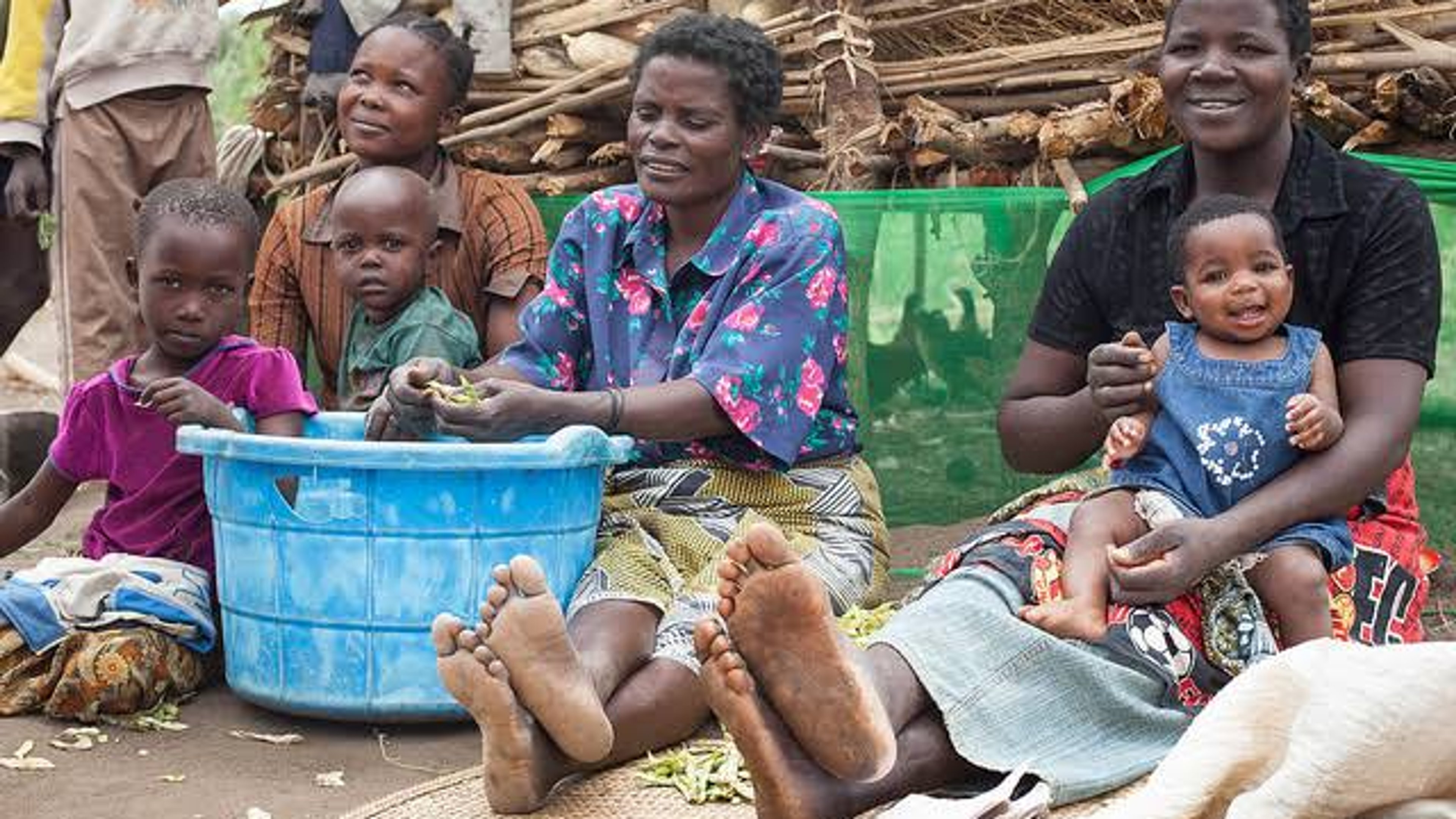
As many as 230,000 adults across two southern districts are receiving roughly 1.2 million kwacha — about $700, which is close to Malawi’s entire annual per-capita economic output — deposited straight into mobile money accounts, theirs to spend however they choose.
The program’s roughly $198 million price tag is funded overwhelmingly by the Canva Foundation, the philanthropic vehicle of the Australian design-software company’s billionaire co-founders, Melanie Perkins and Cliff Obrecht, who have now committed a combined $150 million to the effort since a $10 million pilot began in 2021.
A Tale of Two Villages
The design of the rollout — staggered by district, with some communities paid first and others registered but not yet funded — has inadvertently created a live before-and-after comparison.
In Kamala village in Chiradzulu district, where payments have already landed, the change is visible on the ground: a teenager has converted part of his home into a makeshift cinema charging admission; a tailor has bought an electric sewing machine to keep pace with new orders; households are patching roofs and expanding small shops and food stalls.
A short distance away in Sapali village in Phalombe district, where residents are still being enrolled ahead of payments due in the coming weeks, the mood is markedly quieter — the harvest is in, cash is scarce, and there is little economic activity to speak of.
That contrast is precisely what the trial is designed to measure formally rather than just observe anecdotally.
GiveDirectly says an earlier, smaller pilot in Malawi’s Khongoni area found the share of recipients living above the extreme poverty line roughly doubled within a year of receiving transfers, with only modest local inflation.
The new district-scale phase is testing variables beyond the basic transfer itself — different payment sizes, cash paired with agricultural or education programs, AI-enabled farming advice delivered by chatbot, and lump-sum grants to village committees for shared infrastructure — to work out not just whether cash works, but which version of it works best.
The Case Against Business as Usual
The underlying provocation is aimed squarely at the traditional aid model. For decades, most development assistance to Malawi has arrived earmarked for specific projects and administered through NGOs, government ministries, or donor-run programs — food aid, agricultural subsidies, health interventions, infrastructure — with recipients given little say in how the money is used.
Critics of that approach argue it has bred a cycle of dependency without building durable local capacity, pointing to a national budget in which foreign aid has at times accounted for a fifth to two-fifths of spending, alongside chronically weak tax collection and a narrow, tobacco-dependent export base.
When the United States suspended most of its foreign assistance to Malawi in early 2025 — a cut equal to more than half of that year’s American aid and roughly 6% of the country’s annual import bill — the resulting shock, including thousands of health-worker layoffs and shuttered clinics, underscored just how exposed the country’s social safety net had become to decisions made in donor capitals thousands of miles away.
Unconditional cash transfers flip that logic: instead of a foreign institution deciding what the poor need, the poor decide for themselves.
Perkins has described the philosophy behind the funding in similarly simple terms — that putting choice directly in the hands of families is what drew her and Obrecht to back the program so heavily, and that she considers it among the most effective money the couple has spent.
Open Questions
The experiment is not without skeptics or unresolved risks. A one-time or multi-year cash infusion is not a substitute for functioning schools, clinics, or roads, and critics note that GiveDirectly’s model — funded almost entirely by a single corporate foundation rather than a government budget line — raises an obvious question: what happens to recipients and to the broader local economy once the payments and the philanthropic dollars run out?
Development commentators in Malawi have already begun pressing the Ministry of Finance to publish a transition plan and are asking whether cash transfers of this kind should eventually be absorbed into the country’s permanent social protection system rather than remain dependent on the next willing billionaire.
Even so, for a country that has absorbed roughly $20 billion in conventional aid over 20 years with little to show for it in poverty statistics, a trial rigorous enough to produce a clear answer — cash works, cash doesn’t, or cash works only combined with X — would itself be a meaningful return on investment.
The results from Chiradzulu and Phalombe, expected to be tracked over several years, may end up shaping not just Malawi’s approach to poverty, but how the rest of the aid industry thinks about the value of simply asking the poor what they need, and then trusting them to buy it.