Former Deputy President Rigathi Gachagua has pledged to build a mausoleum at the grave of the late Emurua Dikirr MP Johana Ng’eno, describing it as a lasting tribute to a close political ally.
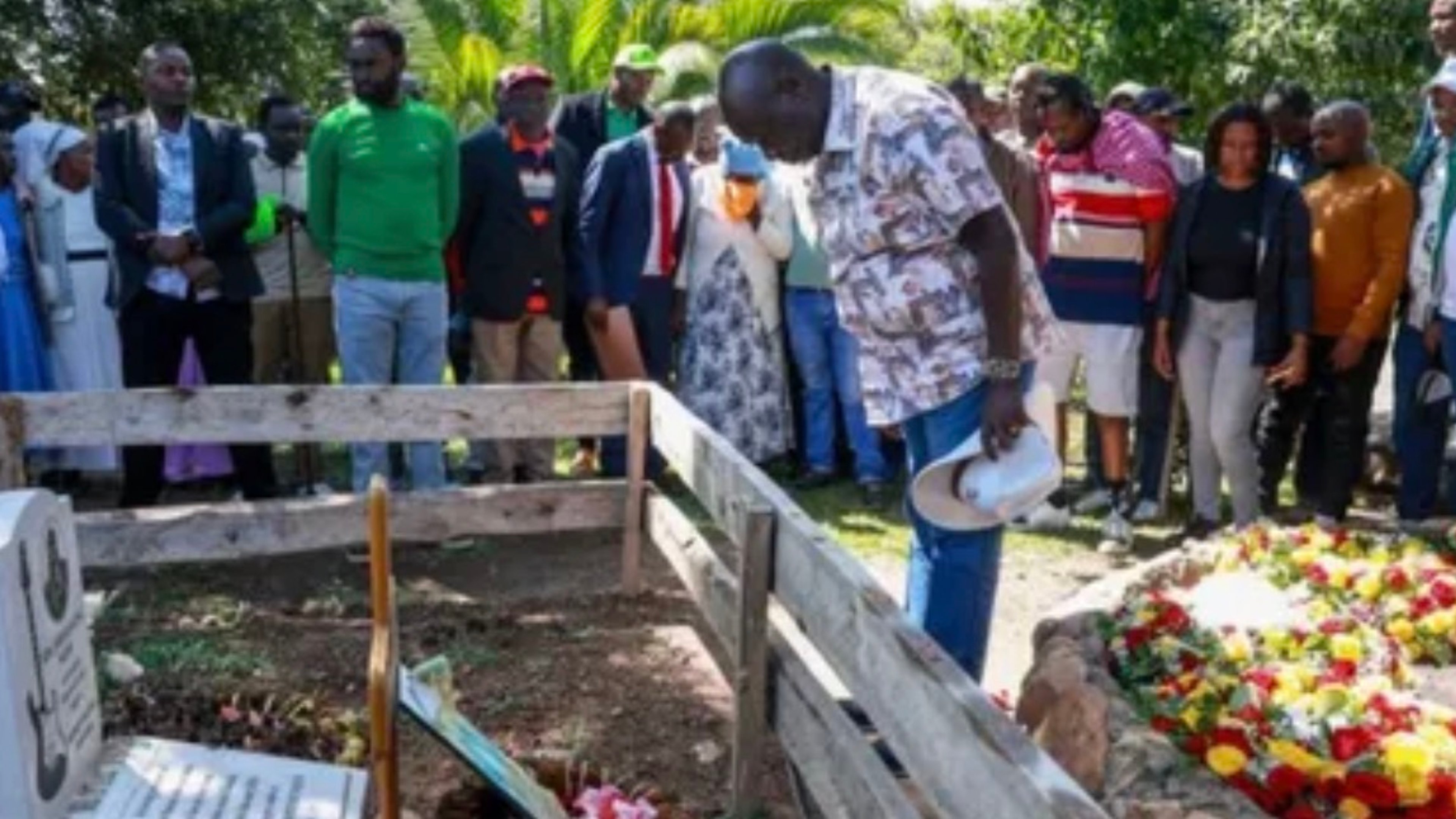
Gachagua made the commitment on Friday while visiting Ng’eno’s family in Mogondo, Narok County, saying, “I will help in the construction of a mausoleum in remembrance of Johana Ng’eno. I will build it because this leader resting here was my very good friend.”
Ng’eno’s mother, Mary Temas, had appealed to the Democracy for Citizens Party (DCP) leader to build a structure sheltering her son’s grave.Gachagua also pledged support for a hospitalised member of the Ng’eno family during the visit.
The gesture comes months after Gachagua controversially skipped Ng’eno’s burial in March, citing objections to sharing space with leaders he blamed for tormenting the MP in life.
Ng’eno, who died in a February plane crash in Mosop, Nandi County, was among lawmakers who voted to impeach Gachagua in October 2024 — though Gachagua has maintained the two remained close confidants.
Separately, the Kenya Defence Forces are building a new mausoleum for former Prime Minister Raila Odinga at his ancestral home, Kang’o ka Jaramogi, in Bondo, Siaya County.
Notably, official figures put the project’s cost at Sh30 million — not Sh300 million as sometimes reported. The National Museums of Kenya set aside the funds under a formal tender in June 2026, following Odinga’s death from cardiac arrest in October 2025 at age 80.
Defence Principal Secretary Patrick Mariru said the KDF-led project, undertaken under President William Ruto’s directive, is meant to preserve Odinga’s legacy in national unity, constitutional reform and democratic governance.
The pentagonal structure, designed by NMK Chief Architect Sanso Malaki, symbolises strength, unity and collective purpose, and will stand beside the existing Jaramogi Oginga Odinga Mausoleum.Officials say the tight timeline necessitated military involvement, with completion targeted for September 30, ahead of the October 15 anniversary of Odinga’s death.
Both memorials underscore Kenya’s evolving political culture of honouring departed leaders through permanent monuments, even as they highlight sharply different scales — a grassroots pledge in Narok versus a state-backed national heritage project in Siaya.