
A uniform statutory tenure is coming to Kenya’s parastatal sector — and it could reshape how the state’s most powerful executives are hired, renewed, and removed.
The Bill
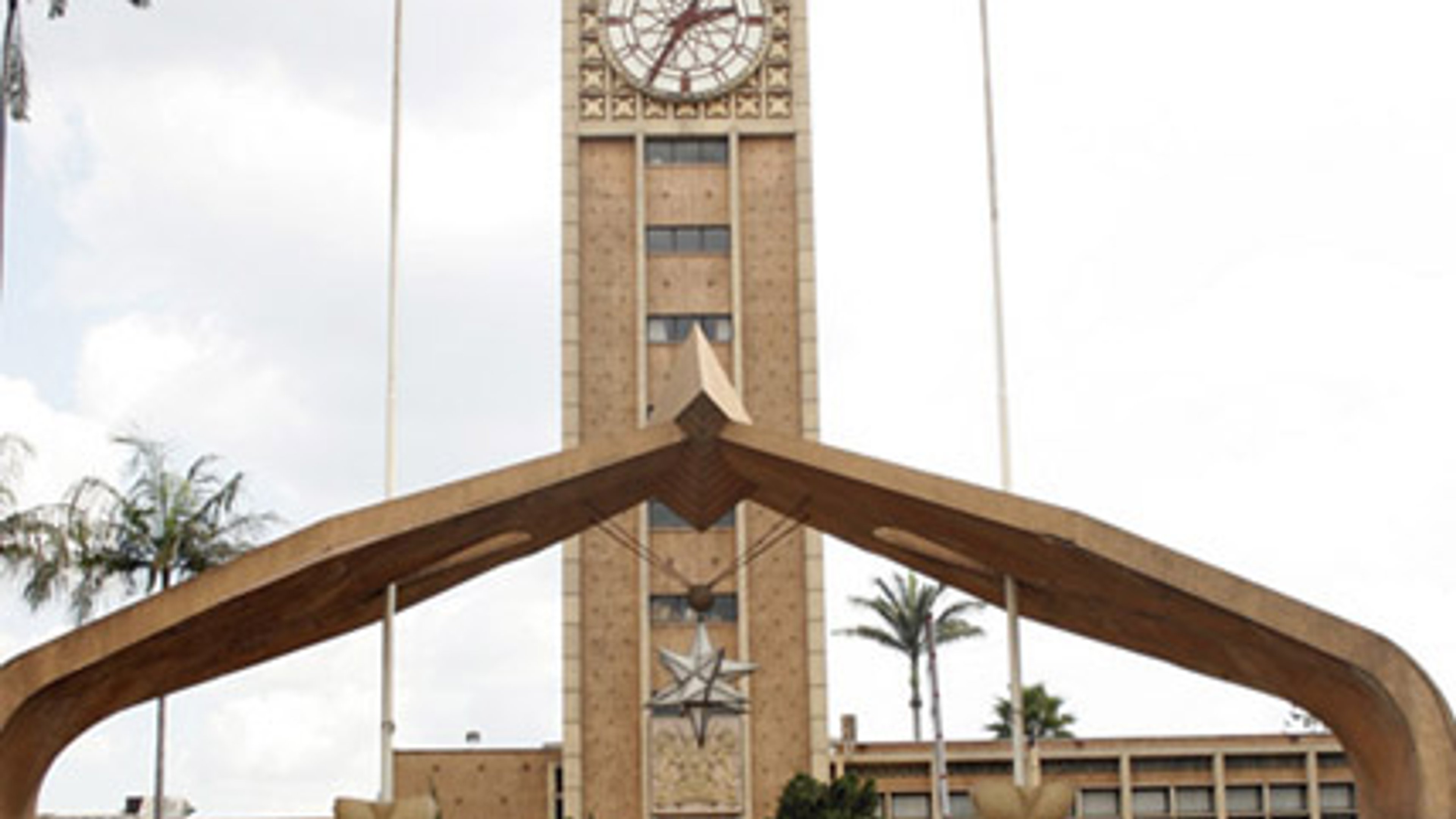
Kenya’s National Assembly is pushing ahead with the State Corporations (Amendment) Bill, 2026, published in Kenya Gazette Supplement No. 212 on August 19, 2026. Sponsored through the National Assembly’s Departmental Committee on Transport and Infrastructure, chaired by MP George Kariuki, the Bill’s core proposal is deceptively simple: every chief executive officer of a State corporation would serve a term of three years, renewable once — a maximum tenure of six years.
The operative clause amends Section 6 of the State Corporations Act (Cap. 446) by inserting a new subsection 2A, which reads, in the Committee’s own formulation, that a chief executive appointed under subsection (1)(b) “shall serve for a term of three years renewable for one term.”
The Bill includes a transitional clause protecting sitting CEOs: anyone in office when the amendment commences would “continue to serve for the unexpired period of their term on the same terms and conditions.” The new tenure cap would therefore apply prospectively — to new appointments and to renewals of existing contracts — rather than truncating terms already underway.
Importantly, the Bill does not touch board member tenure, which remains governed separately. Nor does it strip corporations of the power to remove a non-performing or errant CEO before the end of their term. The Committee has been explicit that dismissal for cause remains available, provided it is carried out consistently with the Fair Administrative Action Act, the Employment Act, and any other applicable law — meaning due process protections stay firmly in place alongside the new tenure ceiling.
Why MPs say it’s needed
The Committee’s memorandum frames the problem as one of inconsistency, not merely of overstaying executives. Its own review found that while most parastatals already operate on three-year, once-renewable CEO contracts, a cluster of institutions — particularly in the roads sector, including the Kenya National Highways Authority (KeNHA), Kenya Rural Roads Authority (KeRRA), and Kenya Urban Roads Authority (KURA) — have historically run five-year renewable terms. That patchwork, MPs argue, has bred disparity in how leadership transitions are handled across the parastatal sector, and has periodically tipped into litigation when contracts lapse, get extended informally, or are renewed without a clear legal basis.
Kariuki has tied the proposal directly to constitutional governance principles and to the Mwongozo Code of Governance for State Corporations (2015), arguing that a uniform tenure framework advances certainty, predictability, and consistency in leadership succession — and curbs what the Committee calls “arbitrary extension of office.”
Where this sits in the wider reform picture
This Bill does not arrive in a vacuum. It is the latest in a run of structural reforms to Kenya’s roughly 300-strong parastatal sector:
• The Government-Owned Enterprises (GOE) Act, 2025, which took effect on 5 December 2025, already restructured governance for the roughly 65–70 commercially oriented State entities, separating them from non-commercial statutory bodies and mandating that GOEs operate as self-financing businesses. Notably, the GOE Act already prescribes a three-year, once-renewable term for independent directors on GOE boards — so the CEO term-limit Bill effectively extends a tenure logic Parliament has already applied elsewhere in the same reform wave to the executive layer.
• Implementation of the GOE Act has triggered board-level shake-ups, including the removal of politically exposed board members at entities such as KenGen, on the reasoning that recent electoral candidates cannot credibly sit as neutral fiduciaries.
• Separately, the National Assembly’s Budget and Appropriations Committee has pressed the Treasury for a deadline-driven programme of privatisation, mergers, and dissolutions of underperforming State agencies, alongside a moratorium on new recruitment and automatic contract renewals for legacy CEOs pending that restructuring.
Read together, the direction of travel is toward tighter, more standardised, and more time-bound executive accountability across the State sector — with the CEO tenure Bill filling what MPs characterise as the last major gap: a uniform statutory ceiling on how long any one person can run a parastatal.
The legal and governance issues to watch
1. Retrospectivity and legitimate expectation. The Bill’s transitional clause is designed precisely to avoid a retrospectivity challenge — sitting CEOs keep their current contractual terms. Litigation risk is more likely to arise around renewals: a CEO partway through a first term under the old five-year framework could argue a legitimate expectation of renewal on the old terms, particularly in roads-sector agencies where five-year contracts have been standard practice.
2. Interaction with existing employment contracts. Because the cap is inserted into the State Corporations Act rather than into each entity’s enabling statute, there is a question of hierarchy where sector-specific legislation (for KeNHA, KeRRA, KURA, and others) currently specifies different terms. The Bill’s drafters will need consequential amendments — or a clear supremacy clause — to avoid conflicting statutory provisions sitting side by side.
3. Due process on removal remains intact. By expressly preserving removal-for-cause under the Fair Administrative Action Act and the Employment Act, the Bill avoids one of the more obvious constitutional vulnerabilities — an executive stripped of tenure without recourse to natural justice. This should insulate it from the kind of challenge that has struck down abrupt, procedurally bare dismissals of State officers in the past.
4. No fiscal or rights impact claimed. The Bill’s own memorandum states it does not require additional public expenditure and does not limit fundamental rights or freedoms — a standard threshold declaration under Kenya’s legislative drafting practice, though one that will still be tested if the Bill proceeds to public participation under Article 118 of the Constitution.
5. Six years may still be too long — or too short — depending on the sector. Critics of uniform tenure rules generally raise two opposite concerns: that a hard six-year ceiling can force out a competent, still-effective executive mid-turnaround, while at the same time doing little to stop a poor performer from serving out a near-decade-long combined term across two full cycles. The Bill’s flat, sector-blind cap does not distinguish between, say, a commercially exposed entity needing continuity of strategy and a smaller regulatory body where faster turnover carries less institutional risk.
What happens next
As a Bill originating from a departmental committee report rather than a private member, it will proceed through the standard legislative sequence: First Reading, referral for public participation, Committee stage (where stakeholder memoranda — from bodies such as the State Corporations Advisory Committee, sector regulators, and civil society — will be received), Second Reading debate, and a Third Reading vote, before transmission for presidential assent. Given that it amends a foundational governance statute, expect active input from affected parastatals, particularly the roads-sector agencies whose current five-year contracts stand to be the most disrupted.
Capping the Corner Office: Inside the Bill to Limit State Corporation CEOs to Three-Year Terms
Kenya’s National Assembly is pushing ahead with the State Corporations (Amendment) Bill, 2026, published in Kenya Gazette Supplement No. 212 on August 19, 2026. Sponsored through the National Assembly’s Departmental Committee on Transport and Infrastructure, chaired by MP George Kariuki
Published 7 min read