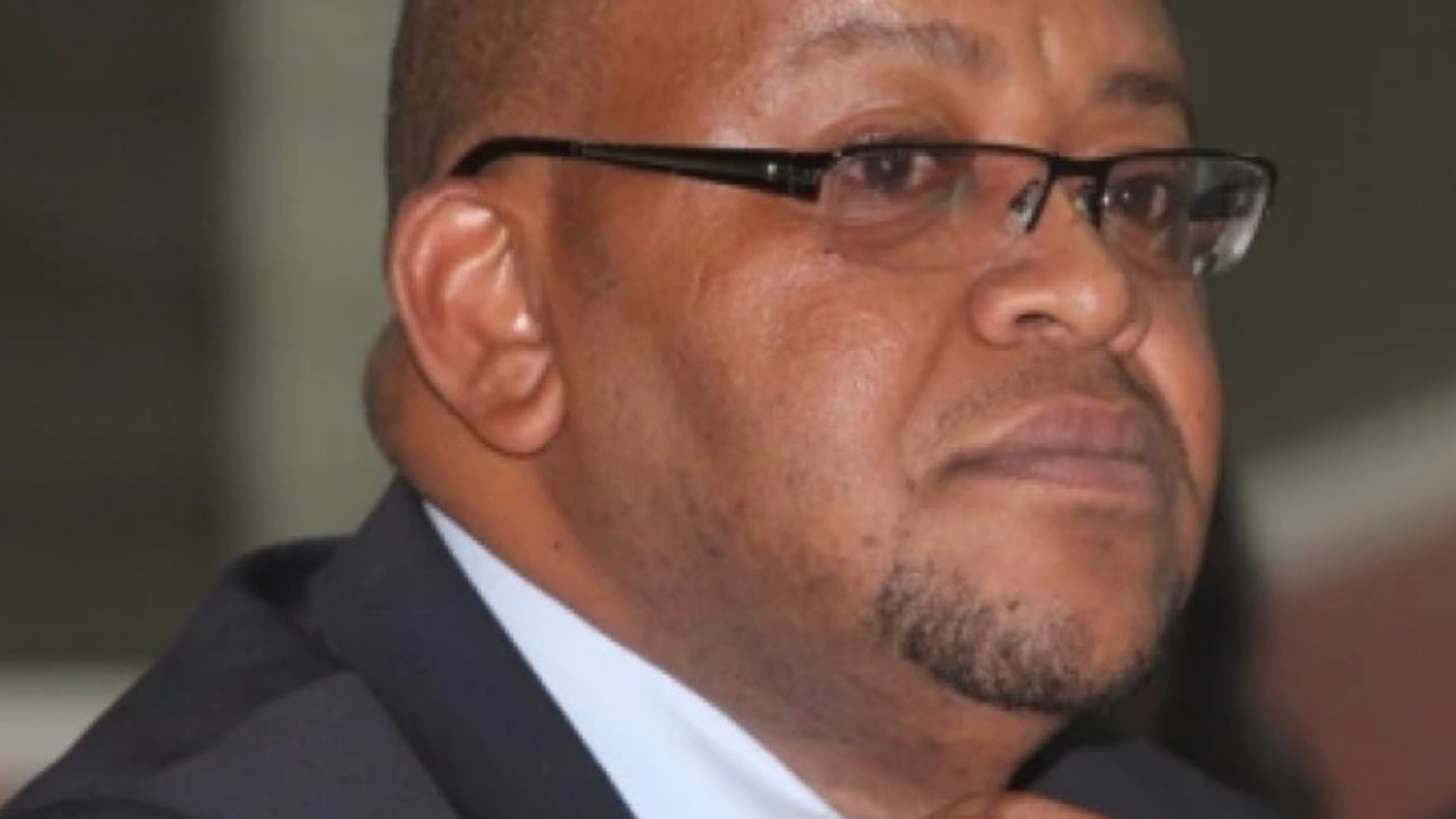
Former High Court Judge Joseph Mbalu Mutava died on Saturday, August 22, 2026, at the age of 75, closing the book on one of the more turbulent judicial careers in Kenya’s post-2010 constitutional order.
He collapsed at his rural home in Kithasyu, Makueni County, hours after attending a burial in the neighbourhood, and was pronounced dead on arrival at Makindu Sub-County Hospital.
His body has since been moved to Lee Funeral Home in Nairobi as the family prepares for his final rites.
He is survived by his wife, Kibwezi East MP Jessica Nduku Mbalu, and their children — a family already well known in Kenyan public life, now navigating grief in full public view.
A career that began with promise
Mutava was appointed to the High Court on August 23, 2011,through a competitive recruitment process sanctioned by the Judicial Service Commission — part of the wave of judicial appointments that followed the 2010 Constitution’s overhaul of the Judiciary.
He was posted to the Milimani Commercial Courts in Nairobi, and before joining the bench had built a career as a legal adviser, including work for the National Bank of Kenya.
Colleagues who worked with him in those early years describe a measured, “soft-spoken” jurist — a characterisation that would resurface, almost ironically, in coverage of the scandal that would come to define his tenure.
The Goldenberg shadow
Mutava’s undoing traces to his handling of a judicial review application connected to the Goldenberg scandal — Kenya’s largest post-independence financial fraud, in which an estimated Sh5.8 billion was fraudulently extracted from the state through fictitious gold and diamond export compensation claims in the late 1980s and early 1990s.
In 2013, the Judicial Service Commission recommended a tribunal to investigate claims that Mutava had allocated himself the file involving Goldenberg figure Kamlesh Pattni outside the normal case-assignment process, and had gone on to acquit Pattni notwithstanding the JSC’s ongoing investigation into his own conduct.
President Uhuru Kenyatta appointed a tribunal chaired by then Court of Appeal judge David Maraga — who would go on to become Chief Justice — alongside High Court judges Maureen Odero and David Majanja, Omesh Kapila and Professor Patricia Mbote.
The process was anything but swift: Mutava’s own challenge to the tribunal’s constitutionality delayed proceedings for years, until the Court of Appeal overturned a High Court decision that had questioned the tribunal’s composition, clearing the way for it to resume.
The tribunal eventually faced 11 counts of alleged impropriety. Eight were dismissed by a sub-committee headed by Supreme Court judge Smokin Wanjala, but three stuck — including allegations that Mutava had irregularly and, in collusion with other parties, caused the Pattni file to be assigned to himself without the knowledge of the duty judge, and that he had interfered with the work of a fellow judge, Justice Leonard Njagi, who later swore an affidavit supporting the claims.
His conduct in a related dispute between the Kenya Airports Authority and World Duty Free, a Pattni-linked company, was also found wanting.
In September 2016, the tribunal delivered its verdict: Mutava’s conduct amounted to gross misconduct under Article 168(1) of the Constitution, and it recommended his removal. Mutava fought the finding all the way to the Supreme Court, but in March 2019 a bench led by Deputy Chief Justice Philomena Mwilu and including Justices Mohamed Ibrahim, Jackton Ojwang’, Isaac Lenaola and Njoki Ndung’u unanimously affirmed the tribunal’s findings, ending his judicial career for good. Notably, Maraga recused himself from the Supreme Court hearing, having chaired the original tribunal.
A shadow that followed him into retirement
Mutava did not fully retreat from public controversy after his removal.
He went on to run a private legal consultancy, largely out of the limelight — until March 2026, when he and three associates were arrested by the Ethics and Anti-Corruption Commission over allegations of soliciting a Sh10.4 million bribe to influence a commercial dispute involving a former Cabinet Secretary.
All four were released on Sh200,000 cash bail each. The case placed his name back in the headlines just months before his death, a reminder that the questions raised by the tribunal in 2016 had never fully receded from his public reputation.
Tributes overlook the record
In the hours following his death, tributes poured in from the political class, most notably from Wiper Patriotic Front leader Kalonzo Musyoka, who described Mutava as a “distinguished public servant” who had served the country with “honour, integrity and quiet distinction,” and invoked Psalm 34:18 in a message of comfort to the family.
Former Machakos Senator Johnson Muthama, who confirmed the death publicly, called him a “long-time family friend.” President William Ruto also extended condolences.
Notably absent from most of these tributes was any direct reference to the findings that ended his judicial career or the more recent EACC case — an omission that speaks to a familiar pattern in Kenyan public mourning, where the immediacy of grief tends to smooth over contested legacies, particularly for those connected to sitting politicians.
Jessica Mbalu is a prominent, long-serving Wiper legislator, and the tributes reflect as much the political weight of the bereaved family as they do an assessment of the deceased’s judicial record.
An honest reckoning
Mutava’s story is, in the end, a case study in the tension between institutional accountability and personal legacy. The tribunal process that removed him — however delayed by his own legal challenges — was one of the more consequential tests of Kenya’s post-2010 framework for judicial discipline, built precisely to ensure that judges are answerable for conduct unbecoming of the bench.
That the Supreme Court unanimously upheld the finding against a sitting High Court judge underscored that the mechanism could, and did, work.
At the same time, obituary coverage inevitably compresses a life into a single narrative arc, and Mutava’s arc resists easy compression.
He was, by multiple accounts, an able lawyer who built a credible practice before joining the bench, and a family man whose loss will be felt most acutely at home — as Kalonzo put it, “it is at home that Mutava will be missed most; as a husband and as a father.” He was also a judge found, after a rigorous and repeatedly tested process, to have compromised his office in a case tied to one of Kenya’s most notorious financial scandals — a finding that reopened in the form of fresh bribery allegations just months before his death.
A full accounting of his legacy has to hold both truths at once, rather than let the sorrow of the moment erase one for the sake of the other. That is not a discourtesy to the grieving family; it is what honest public memory requires, particularly of anyone who held judicial office in the name of the Kenyan people.