

Amaco Energy Group's proposed Mombasa AI facility sidesteps the grid constraint that stalled the Microsoft-G42 project — but leaves the harder questions unanswered.
Greek multinational Amaco Energy Group has told the Kenyan government it wants to build one of the world's largest AI data centres on the coast at Mombasa, at a cost of roughly Ksh194 billion, or $1.5 billion.
Company chief executive Dr Theodore Theodoropoulos has spent this week in Nairobi meeting government officials to seek approval for the project, which would rank among the largest single foreign direct investments in East Africa's technology sector if it proceeds.
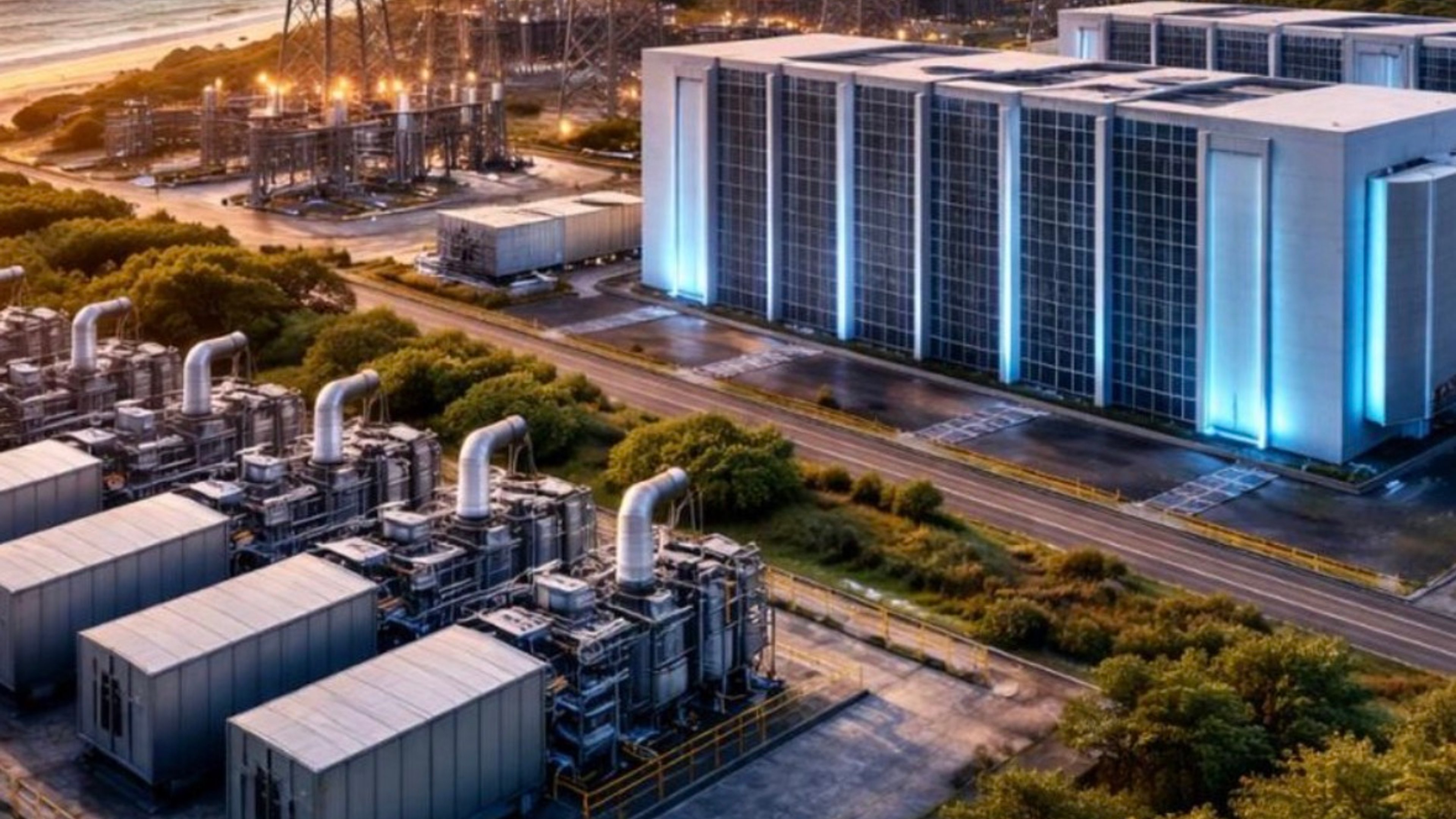
What sets the proposal apart from Kenya's other headline data-centre bid is its power model. Rather than drawing from the national grid, Amaco intends to generate its own electricity offshore using a system it calls Hercules — a liquefied natural gas-powered platform the company describes as a "molecules-to-electrons" ecosystem, combining gas-to-power generation, AI-driven load optimisation, and heat and cold recovery, feeding electricity directly to the data centre.
Amaco says the system could also produce surplus power that might eventually be added to Kenya's wider electricity supply. Several material details, however, remain undisclosed: the exact site, whether the platform will be moored offshore or the data centre built onshore, the financing structure, the construction timeline, and the facility's actual electrical and computing load.
The proposal is best understood as a direct response to the trouble facing Kenya's flagship data-centre project, the Microsoft-G42 facility planned for Olkaria in Nakuru County.
Announced in May 2024 during President William Ruto's state visit to Washington, the roughly $1 billion Olkaria project paired Microsoft with the UAE-based AI firm G42.
It has since stalled, first over a disagreement between Kenya and Microsoft on guaranteed uptake of cloud capacity, and more fundamentally after the facility's power requirement was revised upward from an initial 60 megawatts to 1,000 megawatts to serve regional demand.
Kenya's entire installed generation capacity stands at roughly 3,000 megawatts, meaning Olkaria alone would have consumed nearly a third of the national grid. Ruto acknowledged in May 2026 that the country's electricity system could not absorb a load of that scale without disrupting supply to households and industry.
Amaco's pitch, in effect, is that Kenya's grid constraint need not apply to it at all. By generating power offshore and independently of national infrastructure, Hercules is designed to remove the single largest obstacle that has held up Kenya's most prominent AI infrastructure bid to date.
The proposal also fits a broader pattern of interest in Kenya as a data-centre location. The country is drawing growing attention from multinationals building cloud, AI and digital-finance infrastructure, driven by rising regional demand for computing capacity.
Data centres are notoriously power-intensive, running thousands of servers continuously, and require large volumes of water for cooling — a separate infrastructure and environmental consideration that Amaco has not yet addressed publicly.
The company frames Hercules as a template it could adapt across the continent: geothermal-paired facilities in Kenya, hydro-linked plants in Ethiopia, gas where it is abundant, and solar-storage hybrids in sunnier markets. Amaco's broader corporate materials cite a target of four gigawatts of aggregate net capacity by 2030, though that figure describes the company's overall ambition rather than a disclosed capacity for the Mombasa project specifically.
Industry analysts examining the proposal have been careful to note that what exists publicly at this stage is a proposal, not an approved or financed project, and that several technical and financial questions matter more than the headline investment figure.
Chief among them is the distinction between nameplate and firm capacity: for an AI campus, what matters is dependable power delivered at the server busbar under normal operation, scheduled maintenance and credible equipment failures, not a platform's theoretical maximum output, given that losses accumulate across generation, offshore-to-shore transmission, conversion and distribution. Amaco has not disclosed the intended IT load, the facility's power-usage effectiveness ratio, its redundancy class, or how much of its total capacity would be reserved for cooling rather than computing. Whether the Hercules platform will sit offshore or the data centre will be built onshore remains unconfirmed, and that choice alone would materially change the project's engineering, permitting and environmental profile.
An LNG-fired platform, even an efficient one, also raises questions about how the project squares with Kenya's climate commitments, given that the country's domestic grid already leans heavily on renewable and geothermal generation. The $1.5 billion figure itself, along with the underlying financing structure, customer commitments, construction schedule and environmental approvals, remains outstanding.
Seen in a wider frame, the Mombasa proposal is one expression of a contest playing out across the continent over the physical foundations of the AI economy. African markets are competing not only for cloud companies and AI developers themselves, but for the electricity, fibre, land and water needed to host them. Kenya holds genuine advantages in that competition: an established technology sector, strong international connectivity and substantial renewable-energy resources, particularly geothermal.
But the stall at Olkaria illustrates the constraint that increasingly matters most: as AI computing scales, electricity availability and reliability — rather than fibre capacity or available land — may end up deciding which African markets attract the next wave of hyperscale investment. Amaco's offshore, self-generating model is one answer to that constraint.
Whether it is a workable one at this scale, on this timeline, and under Kenyan regulatory and environmental review, is a question the project has yet to be tested against.
For now, attention turns to whether Amaco discloses its site selection, IT load and financing structure; how the Kenyan government responds formally following this week's talks with Theodoropoulos; what environmental and marine-works approvals the offshore LNG component will require; whether the claimed surplus-electricity contribution to the grid is quantified and under what commercial terms; and how the project's emissions profile is reconciled with a domestic generation mix that is already predominantly renewable.